
From indigenous botanical knowledge and early household preparation to its growth as an Atlanta-based manufacturer, S.S.S. evolved alongside American medicine itself. This article serves as the canonical reference for S.S.S. Tonic history—guiding consumers, internal teams, and future product development with historical accuracy, scientific context, and regulatory clarity.
A Century and a Half of S.S.S. Tonic History
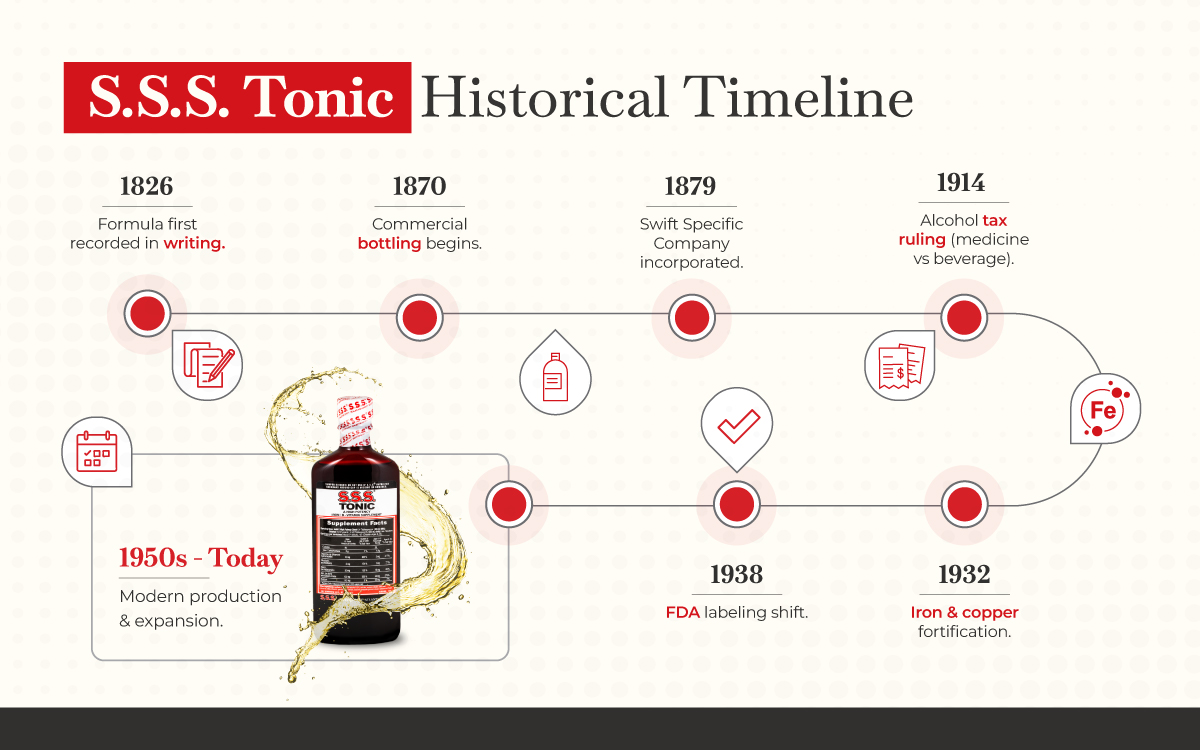
The story of S.S.S. begins with a pivotal and verifiable detail: a written record of the formula dated May 17, 1826. This document represents the earliest known written reference to the remedy and anchors S.S.S. firmly within early American botanical and tonic-era medicine.1
As American medicine transitioned from folk remedies to regulated products, most 19th-century patent medicines disappeared. However, S.S.S. survived by refining its formulation, adjusting its claims, and increasingly aligning with emerging scientific standards, while staying true to its original foundations.
Early S.S.S. Tonic History: The “Secret Remedy” (1826–1870)
S.S.S. tradition preserves an origin story rooted in indigenous medicinal knowledge practiced in Georgia during the early 19th century. Centennial company publications consistently describe the formula as originating with Creek healers and being shared as an act of gratitude rather than commerce.2 Today, many Creek descendants are part of the federally recognized Muscogee Nation. Descendants comprise one of three sovereign tribes.
The Indigenous Gift in S.S.S. Tonic History
According to long-held company lore, the remedy was entrusted to Captain Hugh L. Dennard near Perry, Georgia, during a period associated with The Muscogee’s migration to Oklahoma. The formula reflected generations of indigenous botanical practice and holistic health principles.2
Archival records specify that the original recipe was inscribed in indigenous characters on tanned doe skin and signed by Captain H.L. Dennard in Perry, Houston County, Georgia, on May 17, 1826. Prof. J.H. Beal later identified the "White Ash" in this original "Riecept" as likely being what is modernly known as Prickly Ash, while the "Pine Tops" were likely used as a cover for the boiling pot to condense vapors.
This transition point in S.S.S. history reflects a unique intersection of indigenous cultures. While the gift occurred in Perry, Houston County—the ancestral territory of the Muscogee (Creek) Nation during their 1826 migration from Georgia—the formula was recorded using the indigenous syllabary.
Early Plantation Use
Before commercialization, the tonic was prepared domestically using iron wash-pots and extended boiling processes. It circulated among neighboring plantations as a general tonic. In these early decades, S.S.S. was a raw, unfiltered product stored in hundreds of barrels. It was not until 1932 that the company installed specialized asbestos-filtering equipment to ensure the "immaculate" clarity of the tonic without losing its active botanical virtues.
The Purchase That Preserved S.S.S. Tonic History
Following the Civil War, Colonel Charles Thomas Swift, who had served as a captain, acquired the formula from Captain Dennard for a nominal sum. While some reports cite a price of $25.00, others suggest it was exchanged for a suit of clothes. This acquisition ensured the remedy’s preservation beyond localized domestic use.1
The first formal manufacture occurred circa 1867 in Perry, Georgia, under a partnership between Colonel Swift and R. Guinn, where the medicine retailed for $5.00 per bottle.1
Founding, Incorporation, and Atlanta in S.S.S. Tonic History (1870–1900)
In 1870, Colonel Swift partnered with Colonel H. J. Lamar to bottle and market the remedy commercially. By 1873, operations were firmly tied to Atlanta, positioning S.S.S. at the center of Southern manufacturing and distribution.3
Formal incorporation followed on June 13, 1879, with the creation of The Swift Specific Company. A four-story brick laboratory was constructed at the corner of Hunter and Butler Streets. By the 1880s, the company had established a global footprint, opening a London Office at 35 Snow Hill (1886) and a prominent New York headquarters at 169 W. 23rd Street.3
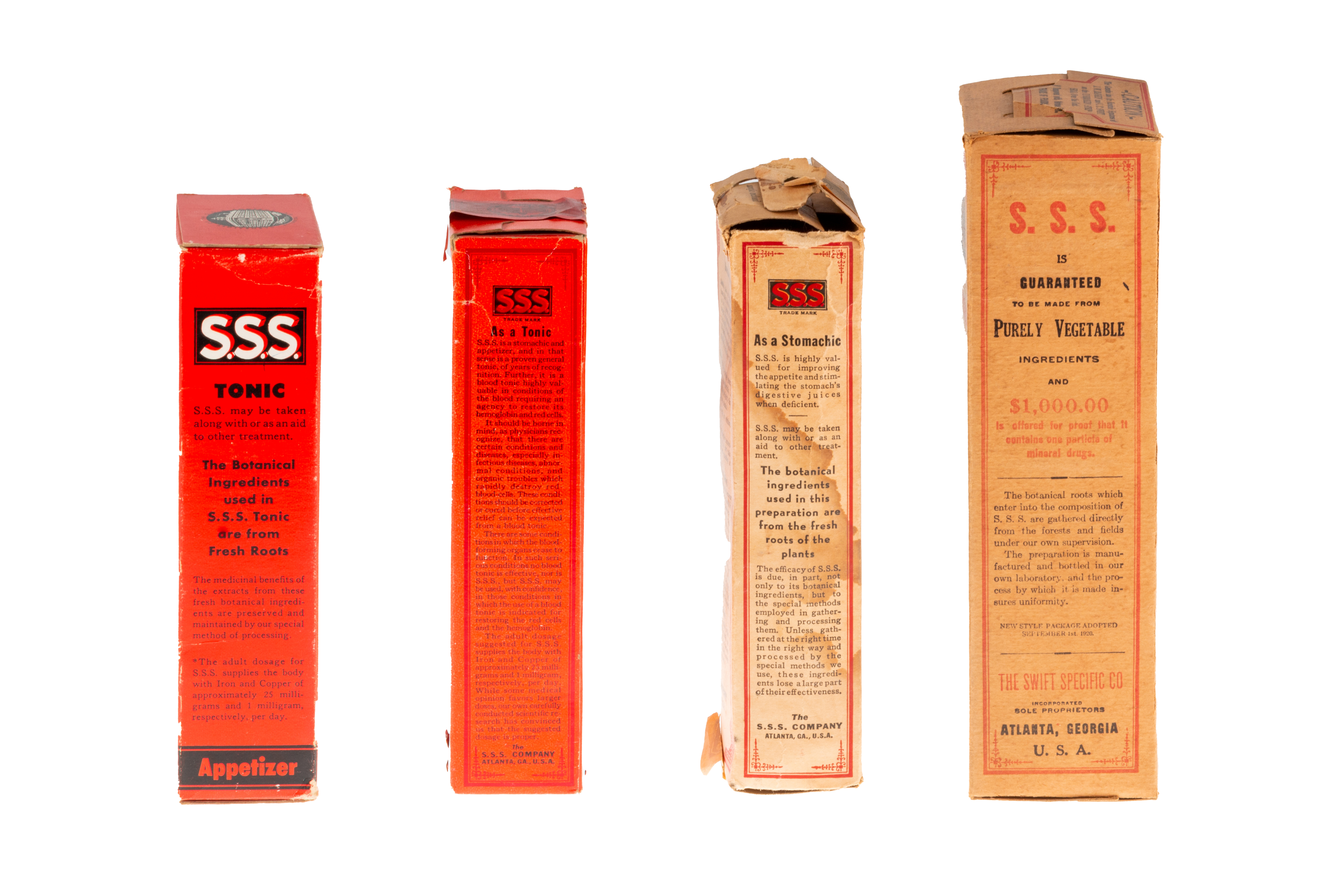
The $1,000 Guarantee
During this era, S.S.S. was famous for its $1,000 Reward offered to anyone who could prove the product contained "one particle of Mercury, Potash, Arsenic, or other mineral." This reinforced the "Purely Vegetable" branding that defined the company for its first century.
Corporate Lineage and Stewardship
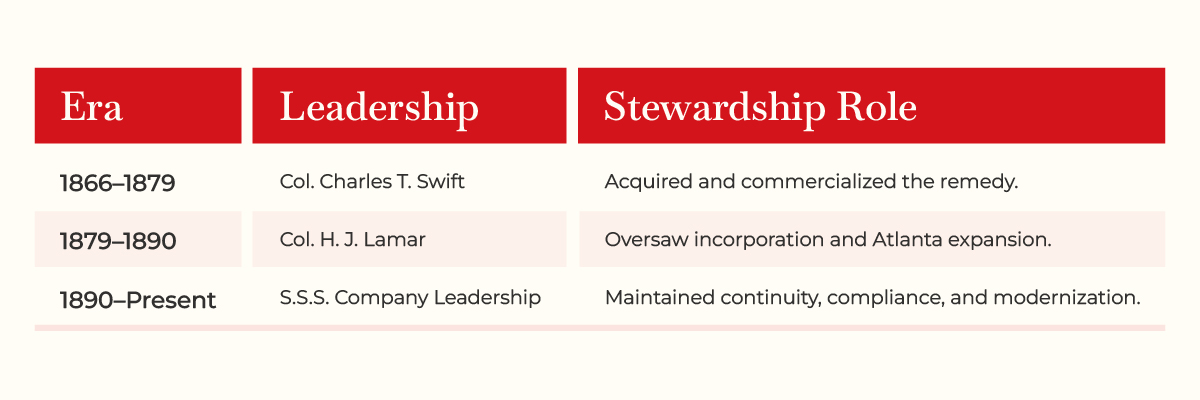
Leadership remained closely held among founders and successors, allowing the company to prioritize long-term integrity over speculative growth. Colonel H. J. Lamar served as President, Colonel Swift as Treasurer, and J. W. Rankin as Secretary and Manager during critical expansion years.3
Following Colonel Swift’s death on December 30, 1890, from an apoplectic convulsion, leadership remained closely held among founders and descendants. Stewardship was maintained as a family trust, a continuity that proved essential in preserving the formula through a century of regulatory change.
The company's leadership remained within the family until Charles Bentley became President and CEO in 1985.
S.S.S. Company actively recruited board members with industry and business expertise to guide the company's growth. For example, during Charles Bentley's transition to CEO, board members included registered pharmacist Dr. Rease Inge; businessman John F. Rogers; business consultant Dr. George M. Parks; and Buren Baldwin, a pharmacy owner and advisor to national pharmaceutical organizations.4
How the S.S.S. Tonic Formula Evolved
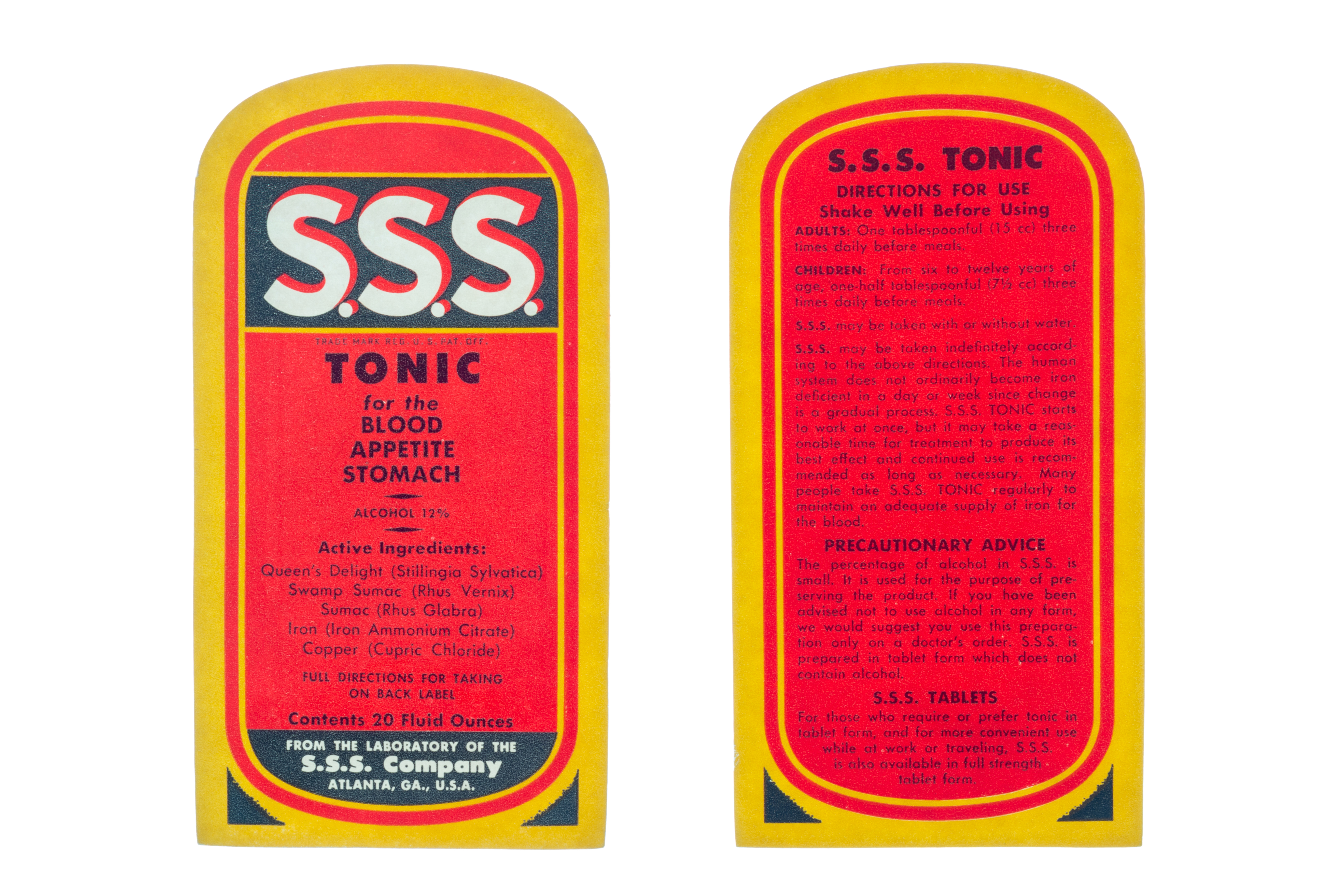
While labeling and regulatory language changed, the formula itself evolved through refinement and standardization rather than replacement. Botanical roots remained central to S.S.S., with scientific enhancements added as understanding of nutrition advanced.5
The Botanical Foundation and 1915 Expansion
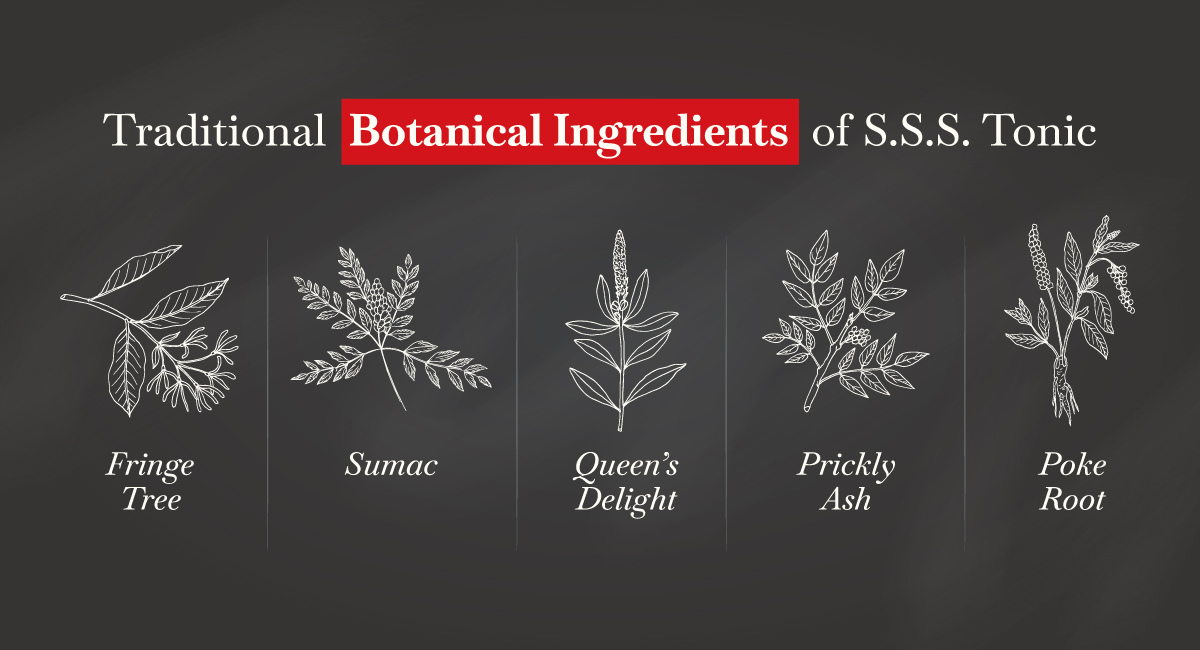
Core ingredients historically included Fringe Tree and multiple Sumac varieties. In May 1915, Prof. J.H. Beal originally suggested adding Yellow Dock (Rumex crispus), Stillingia, and Phytolacca to meet U.S.P. standards. However, after further investigation and an interview with Miles Killen—who had gathered roots for the original owners—the company definitively integrated Poke Root and Queen’s Delight alongside the original ingredients for the 1917 manufacturing season.5
This strategic expansion was suggested by Prof. J.H. Beal, Chairman of the U.S.P. Board of Trustees. He noted that original ingredients like Fringe Tree were not "official" in the U.S. Pharmacopoeia, so adding recognized botanicals like Queen’s Delight, Prickly Ash, and Poke Root provided a stronger legal and scientific defense against potential government challenges.
Modern Enhancements and Standardization
By 1932, iron and copper gluconates were added to ensure consistent mineral delivery, while sodium citrate improved stability. Over time, iron levels increased in response to nutritional research, and Vitamin B-complex was later introduced to address modern dietary deficiencies.5
Alcohol content—once significantly higher (30%) to prevent fermentation—was standardized at approximately 12% absolute alcohol, serving strictly as a solvent and preservative under federal guidance.6,7
Scientific Evaluation and Blood Health Research
As nutritional science advanced, S.S.S. was evaluated in the context of iron metabolism, hemoglobin production, and red blood cell regeneration. Research by Eddy, McGhee, and Kracke helped inform industry-wide understanding of iron-based supplementation and blood health.6,7
The Achlorhydria Discovery: The most critical scientific finding in the company's history occurred during the 1930s, with the discovery that S.S.S. Tonic restored free hydrochloric acid to the stomach in patients with achlorhydria. This "gastric stimulation" was unique because it allowed the body to utilize its own natural functions to absorb iron, a factor that saved the brand’s medical standing when its iron dosage was questioned by federal authorities in 1938.
Clinical studies by Dr. Roy Kracke involving over 300 human subjects proved that S.S.S. could restore red blood cell counts to normal levels within two to three weeks, even while hemoglobin levels lagged behind, showing a sustained improvement over several months. Furthermore, research in 1932 demonstrated that S.S.S. restored neutrophils (white blood cells) to normal states, providing the body with enhanced resistance against bacterial invasion and justifying its historical title as a "Blood Purifier."
Note that these early studies were performed according to standards and practices of the time. Further research is needed to support these claims.
Why S.S.S. Survived: Regulatory Victories
In the early 20th century, the Bureau of Chemistry—the U.S. Department of Agriculture division that enforced the landmark Pure Food and Drug Act of 1906 and served as the direct precursor to the modern FDA—began scrutinizing patent medicines for adulterated ingredients and misleading labels. Many remedies that had thrived in the unregulated 19th century could not survive this new standard of accountability.
Unlike those eliminated by federal oversight, S.S.S. adapted responsibly between roughly 1906 and 1938, refining claims, aligning its formulation with emerging pharmacopoeial standards, and complying with evolving regulations while preserving its original intent.
The 1914 Treasury Victory: On September 18, 1914, the Treasury Department issued Citation No. L 77,124, attempting to impose a liquor tax on the product. The company successfully proved S.S.S. was sufficiently medicated and "unsuitable for use as a beverage," allowing it to be sold as a medicine during Prohibition.
The 1919 Louisiana Affair: In June 1919, the company faced a major crisis when Louisiana attempted to classify S.S.S. as a venereal disease remedy. To protect its non-prescription status, the Board of Directors renounced all such claims and adopted the permanent disclaimer: "S.S.S. is not sold for the treatment, for the cure, or as a remedy for venereal diseases."
The Prohibition Formula (1920): With the advent of the National Prohibition Act, S.S.S. briefly reduced its alcohol content to 8% and utilized a "Special 25-20-5" preservative solution. By 1922, the company returned to the 12% absolute alcohol standard, which was found necessary to hold the botanical extracts in solution.Regulation, Reform, and Scientific Scrutiny
Between 1931 and 1934, S.S.S. navigated intense scrutiny from the Federal Trade Commission (FTC). Following the investigation, the FTC admitted they had "backed down" by the spectacular clinical data provided by S.S.S., particularly the Scottdale Mill Study conducted by Dr. Roy R. Kracke involving over 300 human subjects. Commissioner Hadley noted that the FTC began using S.S.S.’s research as a "yardstick" for gauging other businesses.6
The "Potomac River" Confrontation (1938): Later, in a 1938 conference, despite an initial claim by Dr. Theodore Klumpp that S.S.S. was no more valuable than "Potomac River water," the Department accepted Dr. Kracke's evidence regarding gastric stimulation—proving the tonic helped the body produce its own hydrochloric acid to absorb iron—and officially classified it as a stomachic, appetizer, and tonic.6,7
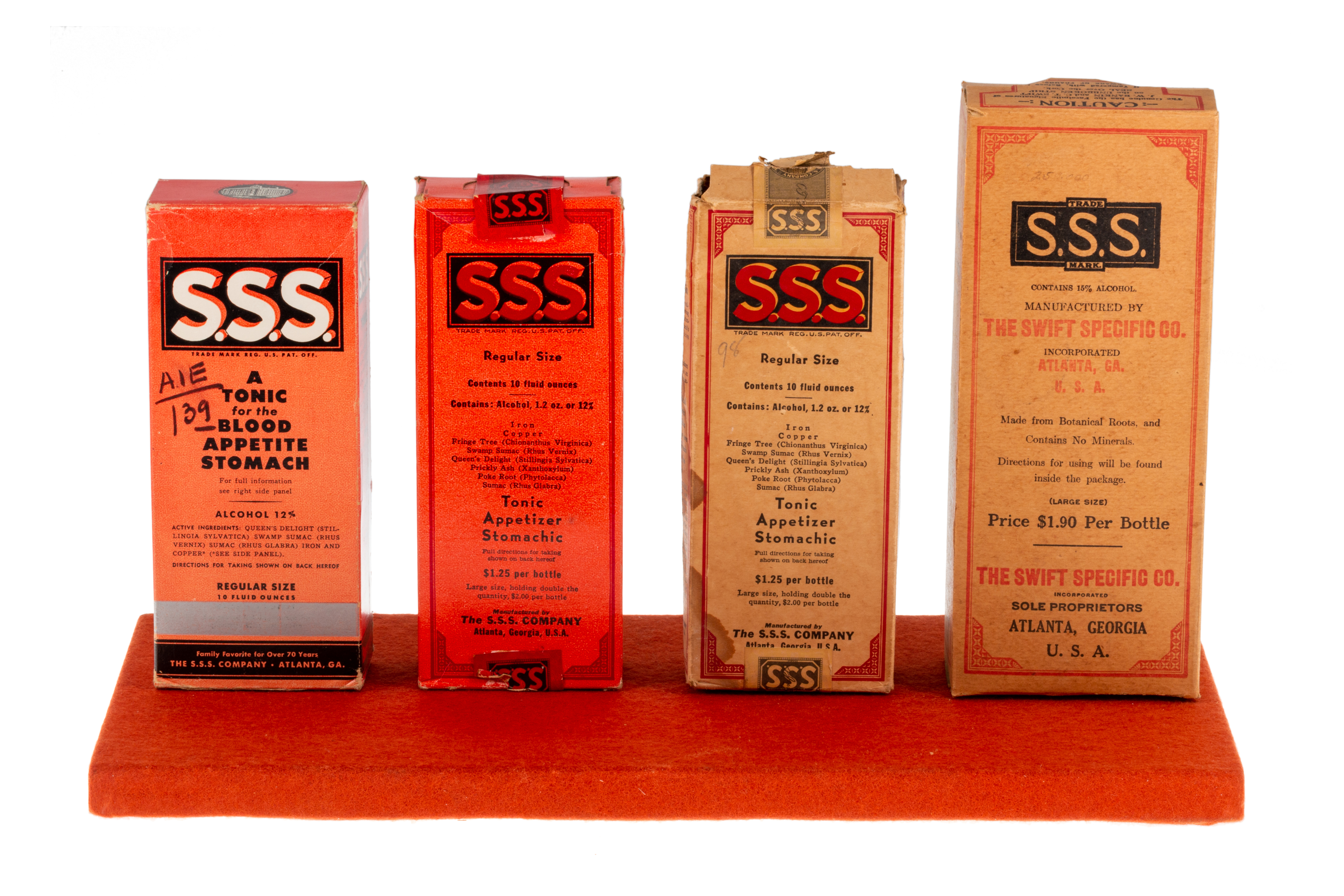
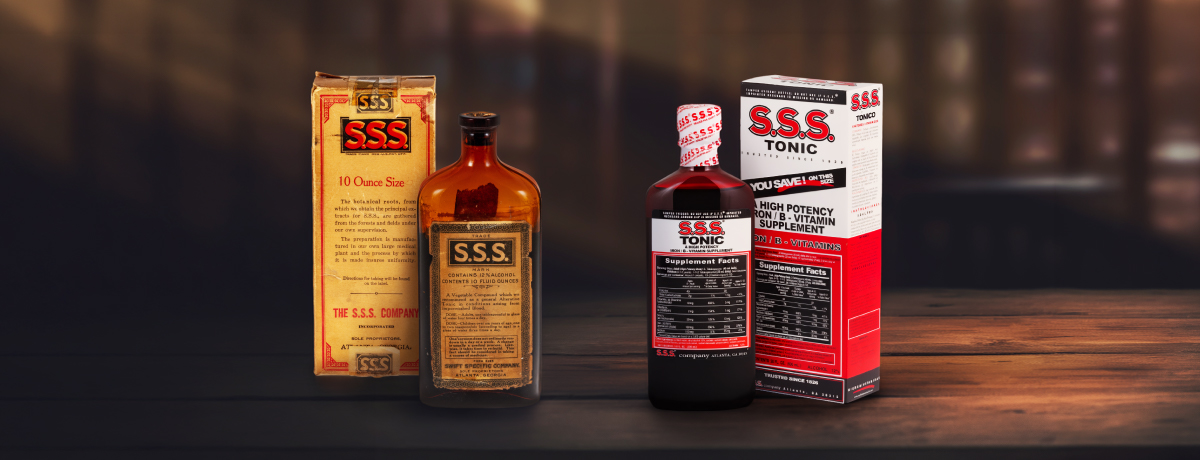
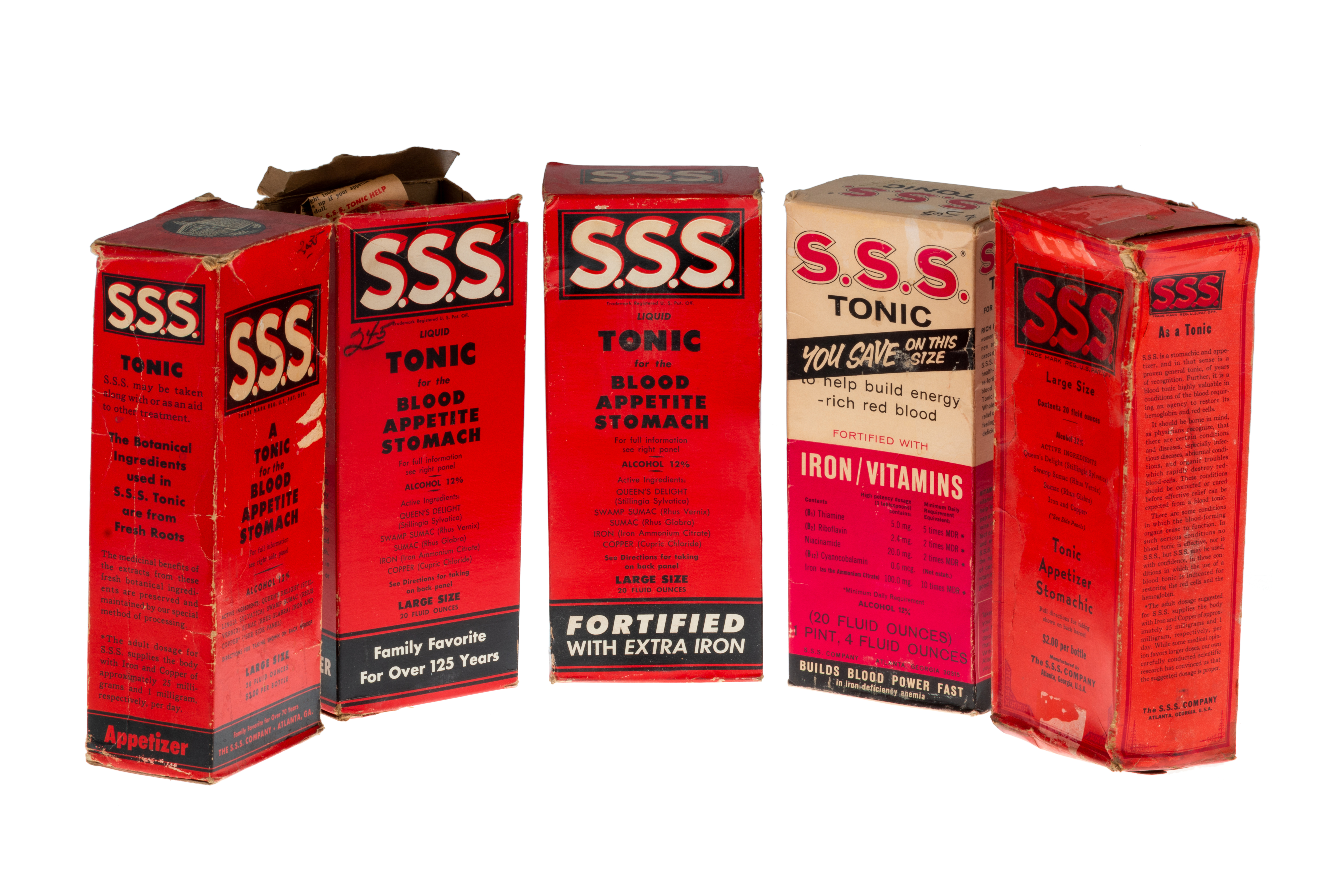
Packaging History: What the Boxes & Flyers Reveal
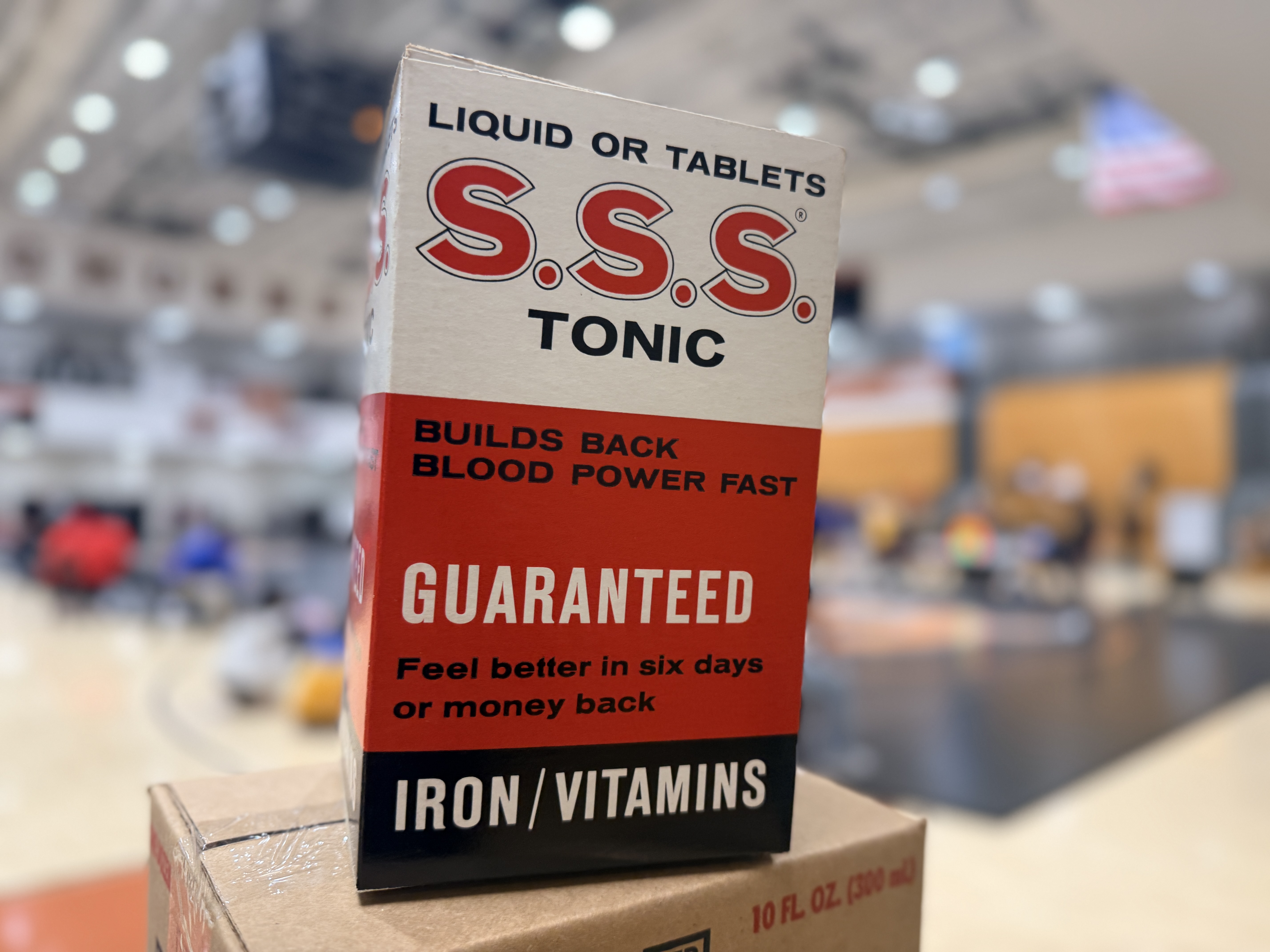
Packaging offers a visual record of how S.S.S. communicated benefits across eras—balancing consumer expectations, scientific clarity, and regulatory compliance.
“Builds Back Blood Power Fast.”
“Guaranteed — Feel Better in Six Days or Money Back.”

S.S.S. in the Modern Era (1950s–Today)
Post-war decades introduced automation, modernization, and expanded global distribution. Facilities were updated for consistency and compliance, while S.S.S. reached regions where iron and vitamin deficiencies remained prevalent.6,7 In 1980, S.S.S. Company transitioned from packaging the S.S.S. Tonic in glass bottles to plastic bottles. Plastic offered a more cost-effective, breakage-resistant, and lighter alternative to glass.
A critical standard was set in 1954 (File No. 1-6637) when the company increased the iron dosage from 25mg to 100mg to satisfy persistent FTC requirements and ensure therapeutic efficacy.
An Enduring Family Legacy
S.S.S. endures by balancing continuity with adaptation. Its research-driven, compliance-focused philosophy allowed it to survive eras that eliminated most competing remedies.
Rooted in tradition and strengthened by science, S.S.S. Tonic remains a lasting part of American health history—carrying forward a legacy that began with a single written record in 1826.
A Century and a Half of S.S.S. Tonic History
| Year | Event | Canonical Detail |
|---|---|---|
| 1826 | The Receipt | Initial recording of the formula. |
| 1878 | First Trademark | Issued to C. T. Swift; product retailed for $2.50 at that time. |
| 1886 | London Office | Established at 35 Snow Hill to market S.S.S. in the British Empire. |
| 1897 | Storage Modernization | Abandoned barrel storage for forty 1,000-gallon cypress tanks. |
| 1922 | Alcohol Standard | Standardized at 12% absolute alcohol and 4% glycerine to maintain stability. |
| 1932 | Fortification | Added iron and copper gluconates after Pfizer and Merck brought them to market. |
| 1954 | Iron Standard | Standardized iron content at 100mg per daily dose per FTC requirements. |
References
- A Century of Accomplishment: 1826–1926. Swift Specific Company, Atlanta.
- Swift Specific Company. Internal archival and centennial records.
- Swift Specific Company. Internal company incorporation records and corporate history (1870-1900).
- Ginsberg M. The future with confidence; aims for continued growth. Southern Pharmacy Journal. 1985.
- S.S.S. Company. Internal manufacturing and formulation records.
- Grenberry WR. S.S.S. History of the Company and its Products, 1826-1942. S.S.S. Company, 1942.
- Fraser HR. The Romance of S.S.S. S.S.S. Company, Atlanta, 1966.